2026년에 인디 게임이 승리하는 이유
인디게임에 대한 인식이 바뀌고 있습니다. 얼마 전까지만 해도 “좋은” 게임을 만들려면 거대한 스튜디오, 수억 달러에 달하는 예산, 그리고 피할 수 없는 마케팅 캠페인이 필수적이었습니다. 하지만 이제는 그런 생각이 통하지 않습니다. 2026년에는 가장 주목받는 게임들이 1인 개발팀이나 소규모 개발팀에서 나오고 있으며, 플레이어들도 이러한 변화를 주목하고 있습니다.
인디 게임 열풍을 이끄는 요인과, 이것이 일반 게이머인 여러분에게 중요한 이유를 알아보겠습니다.
숫자들이 명확한 이야기를 들려줍니다.
인디 게임 시장은 2025년 약 48억 5천만 달러에서 2026년 55억 4천만 달러로 성장할 것으로 예상되며, 2031년에는 100억 달러를 넘어설 것으로 전망됩니다. 이러한 성장은 우연히 일어나는 것이 아닙니다. 이는 플레이어들이 시간과 돈을 쓰는 방식이 실제로 변화하고 있음을 반영합니다.
스팀에서 인디 게임은 2024년 전체 게임 매출의 48%를 차지했는데, 이는 2018년의 24%에서 크게 증가한 수치입니다. 더 이상 틈새시장이 아니라 시장의 절반을 차지하는 규모입니다.
장르 혼합이 새로운 표준이다
2026년에 가장 뚜렷하게 나타나는 추세 중 하나는 인디 개발자들이 대형 스튜디오들이 꺼리는 방식으로 장르를 융합하고 있다는 점입니다. 대형 퍼블리셔에게는 위험 부담이 너무 크지만, 명확한 비전을 가진 소규모 팀에게는 창의적인 이점이 됩니다.
올해 인기 있는 인디 게임들은 블록버스터급 규모를 쫓기보다는 장르 혼합, 스타일리시한 비주얼, 그리고 플레이어 중심의 스토리텔링에 집중하는 경향이 있습니다. 농장 시뮬레이션에 살인 미스터리가 가미된 게임, 전투 대신 날씨와 자원 관리로 승부를 가리는 서바이벌 게임, 그리고 경쟁보다는 소통을 중심으로 설계된 협동 게임 등을 찾아볼 수 있습니다.
액션/어드벤처 장르가 여전히 시장에서 가장 큰 비중을 차지하고 있지만, 시뮬레이션 및 샌드박스 게임의 성장세도 눈에 띄게 나타나고 있으며, 이는 사회적 상호작용 트렌드와 사용자 제작 콘텐츠의 매력을 반영합니다.
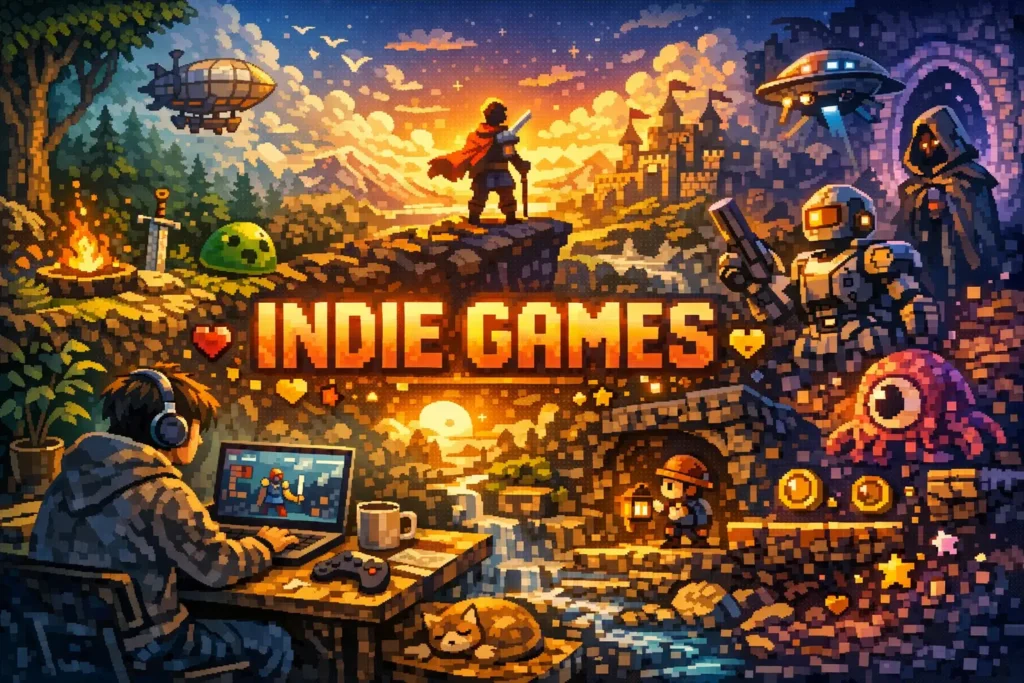
2D 영화가 돌아왔다 — 단순한 향수 때문만은 아니다
2025년이 2D 게임의 전성기가 시작되었음을 사람들이 알아차린 해였다면, 2026년은 그 인기가 누구도 부인할 수 없는 사실이 된 해입니다. 휴대용 게임 플랫폼, 복고풍 디자인, 그리고 고프레임률 2D 게임을 구동할 수 있는 하드웨어의 조합이 2D 게임에 진정한 성장 동력을 불어넣었습니다.
중요한 것은 현대 2D 그래픽이 단순히 과거의 향수를 불러일으키는 것이 아니라는 점입니다. 현대 2D 게임은 픽셀 아트 시대에는 존재하지 않았던 기술, 즉 동적 조명, 물리 기반 파티클, 절차적 애니메이션, 그리고 평면 스프라이트에 깊이감을 부여하는 셰이더 효과 등을 사용하고 있습니다.
영화 같은 복고풍 미래주의적 비주얼 스타일을 자랑하는 REPLACED 나 빈티지 애니메이션 미학과 느와르풍 총격전을 결합한 MOUSE: PI For Hire 같은 게임들은 개발자들이 2D를 예산 제약이 아닌 매체로서 진지하게 받아들일 때 어떤 결과물이 나올 수 있는지를 보여줍니다.
더 작은 팀, 더 나은 도구
인디 게임의 질이 크게 향상된 가장 큰 이유는 더 나은 개발 도구에 대한 접근성이 높아졌기 때문입니다. 무료 오픈 소스 플랫폼인 고도 엔진(Godot Engine) 덕분에 개발자들은 재정적인 여유나 기관의 지원 여부와 관계없이 누구나 전문가 수준의 게임 개발이 가능해졌습니다. 1인 개발자가 만든 발라트로(Balatro) 의 성공은 이러한 변화를 보여주는 대표적인 사례입니다.
업계에서 1인 개발자의 비중은 2024년 18%에서 2025년 21%로 증가했으며, 이 수치는 계속 상승할 것으로 예상됩니다.
AI 도구 또한 중요한 역할을 하고 있습니다. AI가 단순히 개발자를 위해 게임을 만들어 줄 것이라는 예상보다는, AI가 특정 작업을 위한 유용한 협력자로 자리매김하고 있다는 것이 현실입니다. AI는 소규모 팀이 전문 아티스트나 작곡가 없이도 게임 에셋을 제작할 수 있도록 지원하여, 개발자들이 핵심 게임플레이 작업에 더 많은 시간을 투자할 수 있도록 돕습니다.
실제로 플레이할 것
어디서부터 시작해야 할지 모르겠다면, 2026년을 앞두고 꾸준히 화제를 모으고 있는 몇 가지 작품들을 추천합니다.
Slay the Spire 2 — 새로운 엔진으로 제작된 이 게임은 많은 사랑을 받았던 덱 빌딩 로그라이크 게임의 후속작으로, 새로운 캐릭터, 적, 메커니즘을 선보이면서도 원작을 장르의 대표작으로 만든 탄탄하고 반복 플레이가 가능한 구조를 그대로 유지합니다.
Grave Seasons — 이 게임은 익숙한 농장 시뮬레이션 메커니즘에 어두운 분위기를 더해, 플레이어가 작물을 관리하고 관계를 쌓아가는 과정에서 살인 미스터리가 펼쳐지도록 했습니다.
Big Walk 는 Untitled Goose Game 제작진이 만든 협동 탐험 게임으로, 전투보다는 재미있는 발견과 팀워크에 중점을 두어 경쟁이 치열한 시장에서 독특한 정체성을 확립했습니다.
결론
2026년의 인디 게임계는 저예산이나 제한된 야망으로 정의되지 않습니다. 오히려 집중적인 창의적 선택, 장르 실험, 그리고 그 어느 때보다 풍부한 개발 도구를 갖춘 개발자들로 정의됩니다. 이는 일반 게이머들에게 더욱 다양하고 폭넓은 경험을 의미하며, 그중 상당수는 AAA급 게임보다 짧고, 더 빨리 즐길 수 있으며, 가격 또한 저렴합니다.
인디 게임에 관심을 두지 않았다면 지금이 시작하기에 좋은 시기입니다.